Aan de Poel
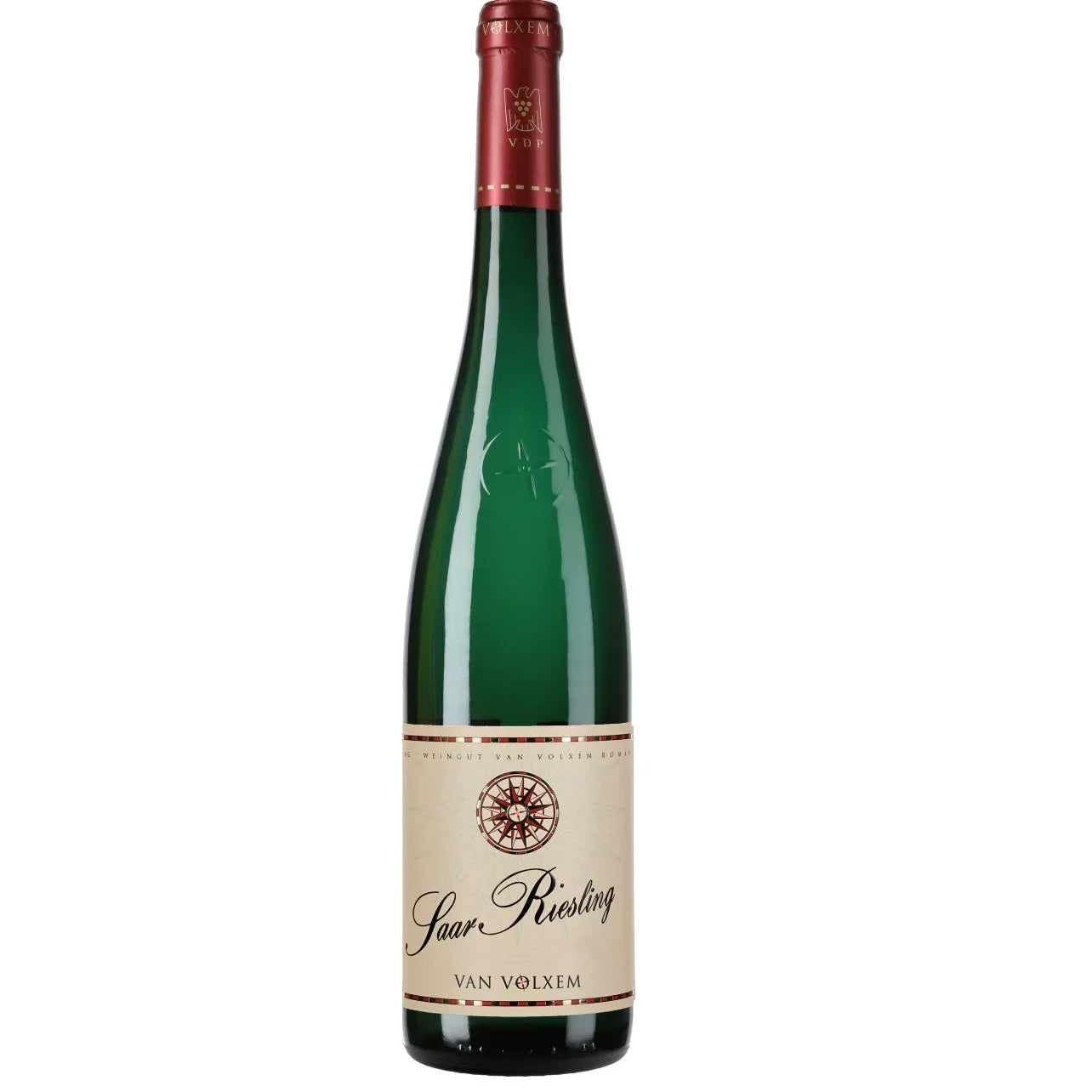
Aan de Poel - Wine with the parsnip soup amuse-bouche
Classification: Qualitätswein, VDP Gutsriesling
Type of wine: Light white wine
Closure: Cork
Country: Germany
Region: Mosel
Producer: Weingut Van Volxem, Wiltingen
Grape variety(ies): Riesling
Wine making: After a manual harvest, the grapes from 30-year-old vines go partly into stainless steel tanks and partly into foeders for soaking and eventually fermentation with wild, grape-native yeasts. There is no malolactic fermentation for this wine. This entire process of vinification and aging takes about 6 to 7 months, using a minimum of sulfur, after which bottling takes place without fining.
Producer information: This estate is located in the historic center of Wiltingen, one of the most famous wine-growing communities on the Saar. As a former monastic wine estate of the Luxembourg Jesuits, it already had large plots of vineyards in the best wine hills of Wiltingen at the beginning of the 18th century, such as Scharzhofberger, Kupp, Klosterberg, and Gottesfuss. In 2003, the Kanzemer Altenberg was added, which, like the other vineyards, was classified as Grand Cru in 1868. The average age of the vines is 40 years, with standouts such as the 120-year-old ungrafted vines in the Gottesfuss, one of the steepest and most renowned Saar plots. Ungrafted rootstocks can grow on slate because the phylloxera cannot take root here. Roman Niewodniczanski, who took over and completely restored the estate in 2000, is a descendant of the Bittburger dynasty. His drive for quality is unbridled and his aim is to optimally express the different top terroirs (steep mineral-rich slate, sandstone, and rhyolite). Large investments have been made in the vineyards for this, and the grapes are always picked late and by hand in several phases at the end of October/November.
Area information: The Mosel wine region, which also includes the tributaries Saar and Ruwer, is one of the most beautiful wine regions in Germany. Wonderful wines are produced here, mainly based on the renowned Riesling grape. The reason this grape thrives so well in this area between Koblenz and Trier is due to a combination of climate and soil. The cool, northern climate ensures that the grape has to ripen for a long time and develops beautiful acids. The soil is beneficial in two ways. Firstly, there is the location of the vineyards, on the steep slopes of the banks of the Mosel and its tributaries. The most beautiful slopes face west, receiving the most hours of sunshine. The variation in the quality of the vineyards is enormous. The Mosel is the German river with the most bends, which means the slopes face all directions. In addition, there is the subsoil itself. The best soil contains a lot of slate. This has the property of retaining the sun's warmth from the day into the evening hours, thus giving the grapes some extra warmth. As a result, the ripening process proceeds gradually.
Serve with: Aperitif, with fish dishes (not smoked) such as ceviche, shellfish and crustaceans, sushi or other Asian dishes, including spicy flavors, creamy fresh cheeses.
Serving temperature: 8 to 10ºC
Wine has been made here since Roman times, and the current buildings of Van Volxem are partly built on foundations from that era. Van Volxem's aim with the dry wines is a digestible wine with an alcohol content of around 12%.
Allergens: sulfites
Shipping information
Shipping information
We deliver throughout the Netherlands (with the exception of the Wadden Islands). Our refrigerated delivery costs are €6.90 (excluding €3 service fees).
Please note: on Sunday, April 20, we will charge an increased delivery fee of €19.80 due to the national holiday. You can also choose to have your meal delivered on Saturday, April 19 for €6.90 and eat it on Sunday evening.
A small number of exclusive restaurants use a private "priority delivery service". This service costs €29.
The delivery fees we charge cover the refrigerated pickup from the restaurant and ensure that your meal is delivered to your home under optimal conditions. You will be continuously informed of the status of your order. In addition, we work with a specialized courier service that transports each meal with the greatest possible care and attention.
Tab
Tab
Classification: Qualitätswein, VDP Gutsriesling
Type of wine: Light white wine
Closure: Cork
Country: Germany
Region: Mosel
Producer: Weingut Van Volxem, Wiltingen
Grape variety(ies): Riesling
Wine making: After a manual harvest, the grapes from 30-year-old vines go partly into stainless steel tanks and partly into foeders for soaking and eventually fermentation with wild, grape-native yeasts. There is no malolactic fermentation for this wine. This entire process of vinification and aging takes about 6 to 7 months, using a minimum of sulfur, after which bottling takes place without fining.
Producer information: This estate is located in the historic center of Wiltingen, one of the most famous wine-growing communities on the Saar. As a former monastic wine estate of the Luxembourg Jesuits, it already had large plots of vineyards in the best wine hills of Wiltingen at the beginning of the 18th century, such as Scharzhofberger, Kupp, Klosterberg, and Gottesfuss. In 2003, the Kanzemer Altenberg was added, which, like the other vineyards, was classified as Grand Cru in 1868. The average age of the vines is 40 years, with standouts such as the 120-year-old ungrafted vines in the Gottesfuss, one of the steepest and most renowned Saar plots. Ungrafted rootstocks can grow on slate because the phylloxera cannot take root here. Roman Niewodniczanski, who took over and completely restored the estate in 2000, is a descendant of the Bittburger dynasty. His drive for quality is unbridled and his aim is to optimally express the different top terroirs (steep mineral-rich slate, sandstone, and rhyolite). Large investments have been made in the vineyards for this, and the grapes are always picked late and by hand in several phases at the end of October/November.
Area information: The Mosel wine region, which also includes the tributaries Saar and Ruwer, is one of the most beautiful wine regions in Germany. Wonderful wines are produced here, mainly based on the renowned Riesling grape. The reason this grape thrives so well in this area between Koblenz and Trier is due to a combination of climate and soil. The cool, northern climate ensures that the grape has to ripen for a long time and develops beautiful acids. The soil is beneficial in two ways. Firstly, there is the location of the vineyards, on the steep slopes of the banks of the Mosel and its tributaries. The most beautiful slopes face west, receiving the most hours of sunshine. The variation in the quality of the vineyards is enormous. The Mosel is the German river with the most bends, which means the slopes face all directions. In addition, there is the subsoil itself. The best soil contains a lot of slate. This has the property of retaining the sun's warmth from the day into the evening hours, thus giving the grapes some extra warmth. As a result, the ripening process proceeds gradually.
Serve with: Aperitif, with fish dishes (not smoked) such as ceviche, shellfish and crustaceans, sushi or other Asian dishes, including spicy flavors, creamy fresh cheeses.
Serving temperature: 8 to 10ºC
Wine has been made here since Roman times, and the current buildings of Van Volxem are partly built on foundations from that era. Van Volxem's aim with the dry wines is a digestible wine with an alcohol content of around 12%.
Allergens: sulfites
Shelf life
Shelf life
We advise consuming the dishes within 2 days of receipt.
Aan de Poel - Wine with the parsnip soup amuse-bouche