Sterrenchefs casual
Bolenius - Wine with the dessert
In great years, very aromatic, rich in scents of ripe candied fruit, honey, and vanilla from the oak aging. In addition to the full, lush sweetness, the wine contains a remarkable freshness thanks to the lively acidity, which also ensures that the wine can age well.
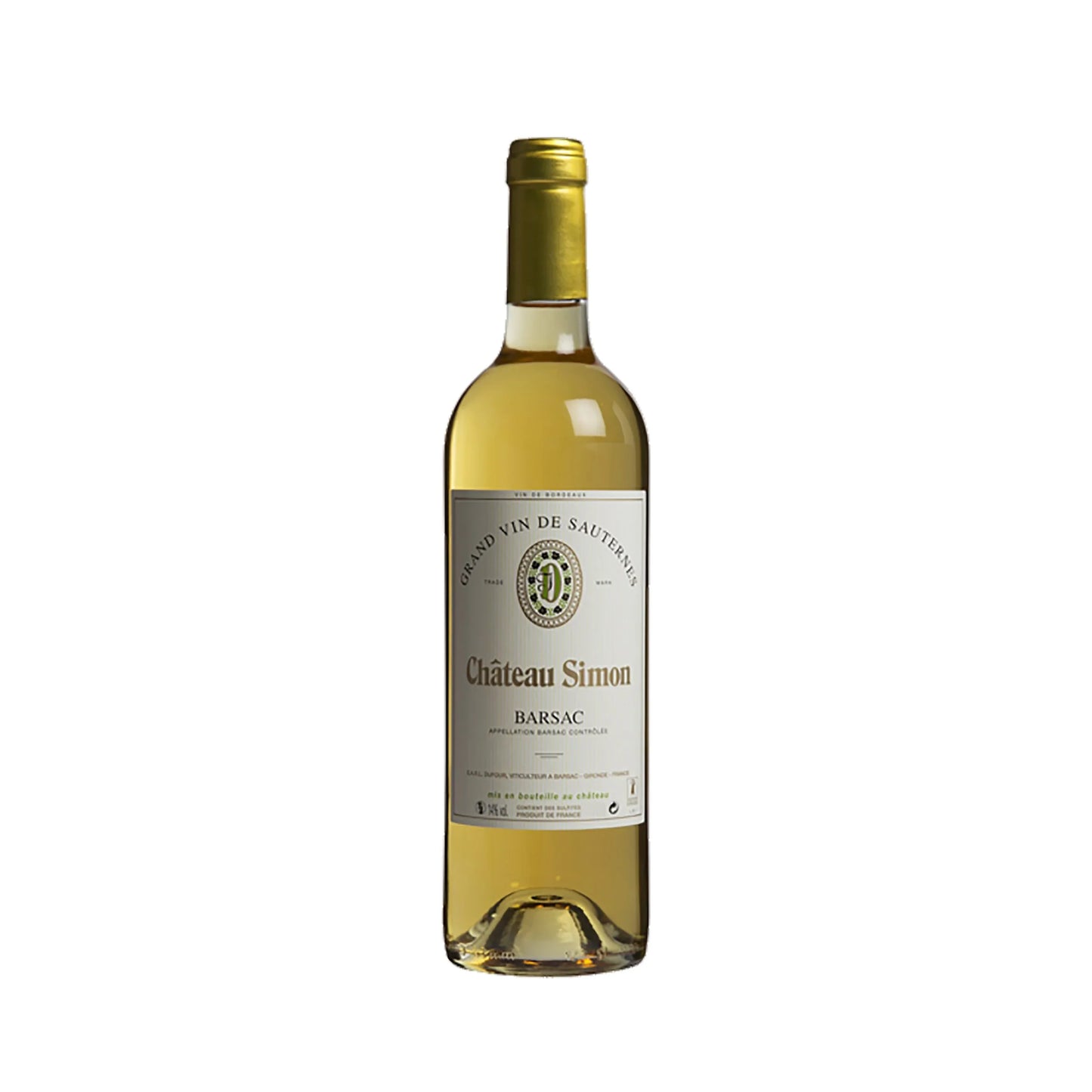
Château Simon, Sauternes
Producer: Anne-Laure Dufour Bonnard
Classification: AOP Barsac, Sauternes
Type of Wine: Full sweet white wine
Grape variety (varieties): sémillon 80%, sauvignon blanc 18%, muscadelle 2%
Closure: Cork
Country: France
Wine region: Bordeaux
Area: Graves & Sauternes
Winemaking: Under the right conditions, the ripe grapes here attract a mold that thrives in the morning mist rising from the river. This mold, Botrytis Cinerea (pourriture noble), perforates the skin, causing the juice in the grape to become concentrated and very rich in sugar. Pourriture noble also gives the wine special flavor nuances and a lot of refinement. The harvest is done in 4 to 5 passes, each time only the affected grapes are cut from the bunch. After fermentation, the wine ages, depending on the vintage, for another 10 to 15 months in new oak barriques, wooden barrels of 225 liters.
Area information: Sauternes is the name of a small wine region of nearly 2,000 hectares on the left bank of the Garonne river. It is a relatively flat area, located about 40 km from the city of Bordeaux. The area includes 5 villages: Sauternes, Fargues, Bommes, Preignac, and Barsac. The soil of Sauternes (which is higher and more hilly) contains a lot of gravel, while in Barsac (which may use its own appellation for its 850 ha of vineyard) there is often much more limestone. Here, the finest sweet wines of France are made. A small river, the Ciron, runs through the area and is important for the formation of botrytis. This special mold develops in the warm, humid autumn and, via the morning mist, covers the ripe grapes. Due to the heat of the day, the molds grow quickly and perforate the skin, causing some of the juice to escape, leaving a high-quality concentrate of sugars and aromatic and flavor substances. This process is called 'pourriture noble', or 'noble rot'. Dry white wines from this famous region must be sold as Bordeaux Blanc.
Producer information: Château Simon has been owned by the Dufour family since 1814. Both white and red grapes are planted on the 38-hectare vineyard. About 17 hectares are used for producing Sauternes. The remaining 21 hectares of vineyards are used for the production of white and red AOP Graves and white and red AOP Bordeaux wines. The soil here contains a lot of limestone and clay with occasional concentrations of gravel. The average age of the vines at Château Simon is 30 years, with 6,000 vines per hectare. Since 1983, efforts have been made to reduce the use of pesticides and insecticides. Now, three generations of the Dufour family work in the company, with extensive knowledge in vineyard management and vinification. Anne-Laure and Pauline are the youngest generation at Château Simon, ensuring consistently high quality at a very reasonable price.
Serving suggestions: With rillettes, foie gras or duck liver, stews of white poultry and mushrooms, desserts with red fruit, peach, apricot, pear, crème brûlée and classic soufflés.
Serving temperature: 10 to 12ºC
Other information: During prolonged rain in autumn, the 'noble' rot can turn into a harmful variant, the 'gray' rot. Then the harvest is lost, and in the worst case, no wine is made that year. Wines from the AOP Barsac may also be marketed as AOP Sauternes. This is often done in exports because Sauternes is better known than Barsac.
Shipping information
Shipping information
We deliver throughout the Netherlands (with the exception of the Wadden Islands). Our refrigerated delivery costs are €6.90 (excluding €3 service fees).
Please note: on Sunday, April 20, we will charge an increased delivery fee of €19.80 due to the national holiday. You can also choose to have your meal delivered on Saturday, April 19 for €6.90 and eat it on Sunday evening.
A small number of exclusive restaurants use a private "priority delivery service". This service costs €29.
The delivery fees we charge cover the refrigerated pickup from the restaurant and ensure that your meal is delivered to your home under optimal conditions. You will be continuously informed of the status of your order. In addition, we work with a specialized courier service that transports each meal with the greatest possible care and attention.
Tab
Tab
In great years, very aromatic, rich in scents of ripe candied fruit, honey, and vanilla from the oak aging. In addition to the full, lush sweetness, the wine contains a remarkable freshness thanks to the lively acidity, which also ensures that the wine can age well.
Château Simon, Sauternes
Producer: Anne-Laure Dufour Bonnard
Classification: AOP Barsac, Sauternes
Type of Wine: Full sweet white wine
Grape variety (varieties): sémillon 80%, sauvignon blanc 18%, muscadelle 2%
Closure: Cork
Country: France
Wine region: Bordeaux
Area: Graves & Sauternes
Winemaking: Under the right conditions, the ripe grapes here attract a mold that thrives in the morning mist rising from the river. This mold, Botrytis Cinerea (pourriture noble), perforates the skin, causing the juice in the grape to become concentrated and very rich in sugar. Pourriture noble also gives the wine special flavor nuances and a lot of refinement. The harvest is done in 4 to 5 passes, each time only the affected grapes are cut from the bunch. After fermentation, the wine ages, depending on the vintage, for another 10 to 15 months in new oak barriques, wooden barrels of 225 liters.
Area information: Sauternes is the name of a small wine region of nearly 2,000 hectares on the left bank of the Garonne river. It is a relatively flat area, located about 40 km from the city of Bordeaux. The area includes 5 villages: Sauternes, Fargues, Bommes, Preignac, and Barsac. The soil of Sauternes (which is higher and more hilly) contains a lot of gravel, while in Barsac (which may use its own appellation for its 850 ha of vineyard) there is often much more limestone. Here, the finest sweet wines of France are made. A small river, the Ciron, runs through the area and is important for the formation of botrytis. This special mold develops in the warm, humid autumn and, via the morning mist, covers the ripe grapes. Due to the heat of the day, the molds grow quickly and perforate the skin, causing some of the juice to escape, leaving a high-quality concentrate of sugars and aromatic and flavor substances. This process is called 'pourriture noble', or 'noble rot'. Dry white wines from this famous region must be sold as Bordeaux Blanc.
Producer information: Château Simon has been owned by the Dufour family since 1814. Both white and red grapes are planted on the 38-hectare vineyard. About 17 hectares are used for producing Sauternes. The remaining 21 hectares of vineyards are used for the production of white and red AOP Graves and white and red AOP Bordeaux wines. The soil here contains a lot of limestone and clay with occasional concentrations of gravel. The average age of the vines at Château Simon is 30 years, with 6,000 vines per hectare. Since 1983, efforts have been made to reduce the use of pesticides and insecticides. Now, three generations of the Dufour family work in the company, with extensive knowledge in vineyard management and vinification. Anne-Laure and Pauline are the youngest generation at Château Simon, ensuring consistently high quality at a very reasonable price.
Serving suggestions: With rillettes, foie gras or duck liver, stews of white poultry and mushrooms, desserts with red fruit, peach, apricot, pear, crème brûlée and classic soufflés.
Serving temperature: 10 to 12ºC
Other information: During prolonged rain in autumn, the 'noble' rot can turn into a harmful variant, the 'gray' rot. Then the harvest is lost, and in the worst case, no wine is made that year. Wines from the AOP Barsac may also be marketed as AOP Sauternes. This is often done in exports because Sauternes is better known than Barsac.
Shelf life
Shelf life
We advise consuming the dishes within 2 days of receipt.
Bolenius - Wine with the dessert